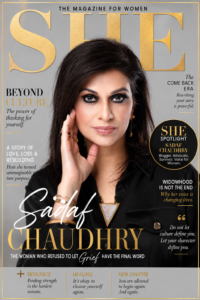
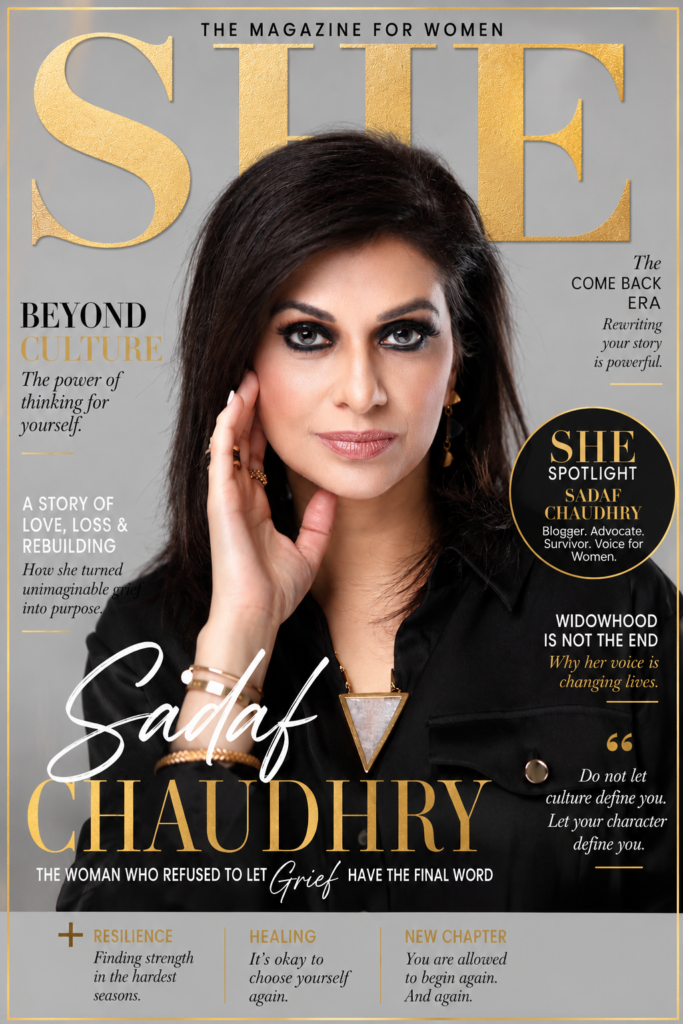
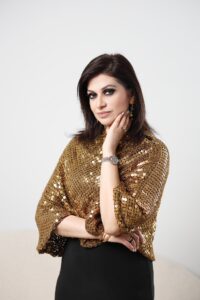
Before she became an advocate, before her words reached women across continents, Sadaf Chaudhry was simply a woman trying to understand where she belonged.
An international blogger based in the United States, Sadaf launched her platform in 2019 with the hope of empowering women globally. Born and raised in America as a Pakistani woman, she grew up balancing western life with eastern cultural expectations—a journey that was not always easy.
Like many women navigating dual identities, she experienced the stigmas and pressures often placed upon Pakistani women. Yet what stayed with her most was not religion itself, but culture: the unspoken rules, expectations, and invisible boundaries women often grow up with.
For much of her life, Sadaf felt shaped more by culture than religion. She questioned why speaking openly, thinking differently, or expressing opinions outside cultural norms could feel almost forbidden.
Why does independent thought make people uncomfortable?
Why are women expected to remain within lines they never drew?
Those questions became the foundation of her work.
Her platform was never created to challenge race or religion. It was created to challenge silence. Through her writing, she began discussing taboo topics often avoided within Pakistani and Muslim communities while sharing her experience as an American-Pakistani woman trying to find where she fit in.
Then life changed.
On July 9, 2022, Sadaf buried her husband after his battle with Glioblastoma Grade 4 brain cancer. Her son buried his father.
Their world shattered.
She lost the man she loved most, and with him, the future they had built together. After the funeral came silence—no roadmap, no identity, only grief.
Then one night, her son looked at her and said:
“My life will never be the same.”
In that moment, she realized neither would hers.
But she also knew this could not be the end of their story.
She made a promise to keep showing up—for her son and for herself—even on the days grief felt impossible.
Widowhood brought another painful reality. During one of the most vulnerable seasons of her life, Sadaf experienced manipulation and a loss of self-worth. It became a turning point that shaped her purpose.
Today, she advocates for women who have been manipulated, targeted, or emotionally exploited during vulnerable chapters of life, especially widows and divorcees.
Because she was one of them.
She also became an advocate for greater Glioblastoma awareness, joining the GBM Foundation to raise awareness not only about the disease itself, but about the emotional impact it leaves on families long after loss.
Grief changes people. Vulnerability changes people. And these are conversations she believes society does not have enough. Yet Sadaf’s story is not one of grief alone. It is also one of rebuilding.
In time, she opened her heart to herself, again, rediscovering love within and proving that joy after loss is not betrayal—it is survival.
Faith also became part of her healing journey. Her pilgrimage to Hajj offered reflection, peace, and acceptance. For a period, she chose to wear the hijab as an expression of devotion, later making the personal decision to remove it when she realized she was not ready to carry the expectations attached to visibly representing faith.
She chose honesty over performance.
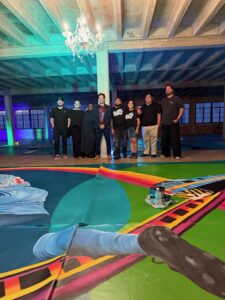
Recently, Sadaf spoke to graduating seniors at The Summit Country Day School about family, resilience, belonging, and identity.
Her message reflected everything she has lived:
Do not let culture define you. Let your character define you.
Today, Sadaf Chaudhry is far more than a blogger. She is a storyteller of survival, a mother rebuilding after loss, and a woman transforming pain into purpose. Her story is not about tragedy. It is about what happens after.
And Sadaf Chaudhry chose to rise.
Beena Yusuf
Editor in Chief
www.shemagazineusa.com